


Checklist for Buying Work Shoes for 8–10 Hours: Don't Choose If They Fail These 5 Tests

For the modern working woman, an 8 to 10-hour shift is the standard reality. Whether you are running between meetings, teaching in a classroom, or managing a business, you are constantly on the move.
Today, we are spoiled for choice. There are countless brands releasing aesthetically stunning shoes that make us rambang mata.
However, this abundance often leads to a common mistake. We prioritise how the shoe looks in the mirror rather than how it functions for our feet.
It is time to stop buying based on guesswork. Before you make your next purchase, apply these 5 mandatory tests. If a pair does not pass this checklist, do not buy them.

Test 1: The Toe Movement Test
The first rule of foot health is respecting your anatomy. Your toes need room to function.
How to do the test: When you put the shoe on, try to wiggle your toes. You should be able to move them freely without them overlapping or feeling crushed.
Red flags:
-
You cannot separate your big toe from the others.
-
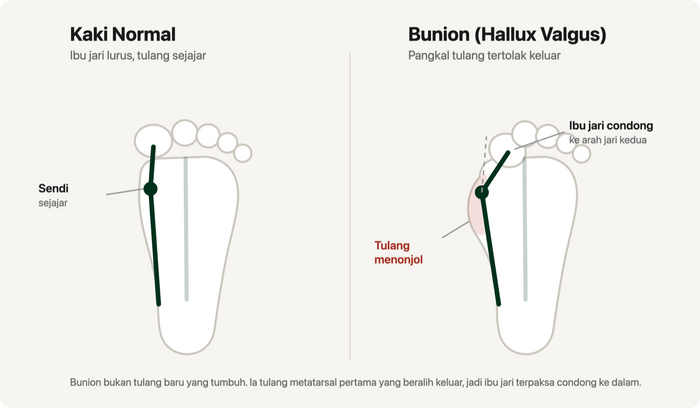
You feel immediate pressure on the side of your foot, around the bunion area.
Asian feet often have a wider forefoot. While pointed shoes look professional, they can be painful if the cut is too narrow. If it squeezes now, it will torture you three hours later.
If this test fails: you need a wider cutting, not a bigger size. Evana Square Toe Pump Heel has a square toe with a roomier front, and Karla Pump Block Heel has a wide toe box on a stable block heel.

Test 2: The Cushion Rebound Test
Cushioning is not just about softness. It is about how the material recovers. A good cushion acts as a shock absorber between your body and a hard floor.
How to identify a living cushion from a dead one: press your thumb firmly into the insole. A living cushion springs back immediately. A dead one feels hard and thin, or sinks without recovering its shape.
If the cushion is dead, your heels and spine take the full impact of every step. This is often why you feel drained by 2 p.m.
If this test fails: look for a latex-cushioned insole rather than plain foam. Sofia Luxe Pointed Kitten Heel and Seroja Luxe Pointed Kitten Heel both use one, and both sit at a walkable 1.5 inches.

Test 3: The Arch Feel Test
Many women assume that flat shoes equal comfort, but this is a misconception. Completely flat shoes with zero support can be as punishing as high heels.
The sensation you want: when you stand, the shoe should rise up to meet the arch of your foot. You should feel a gentle hug underneath.
Supported versus hollow: if the shoe feels hollow or empty under your arch, it lacks structure. This is common in thin-soled, mass-produced footwear.
A shoe with proper arch support prevents the foot from collapsing inward, which saves your knees and lower back from pain.
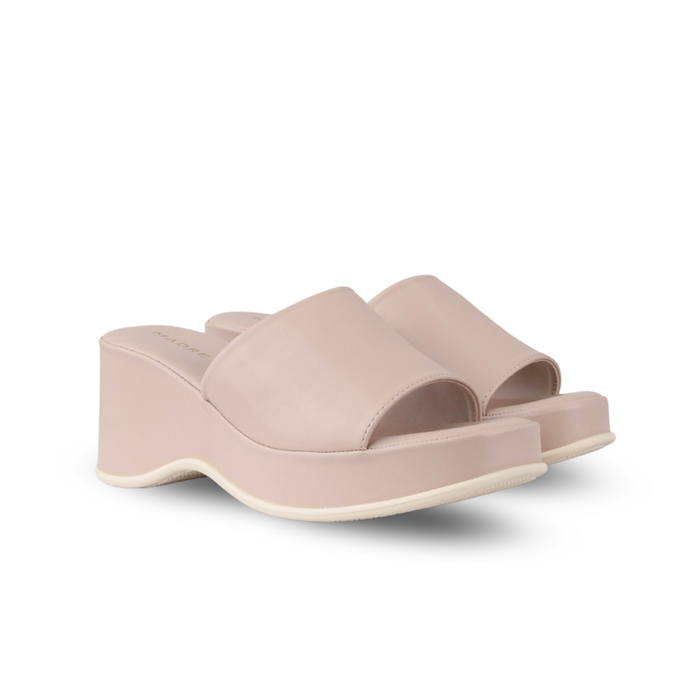
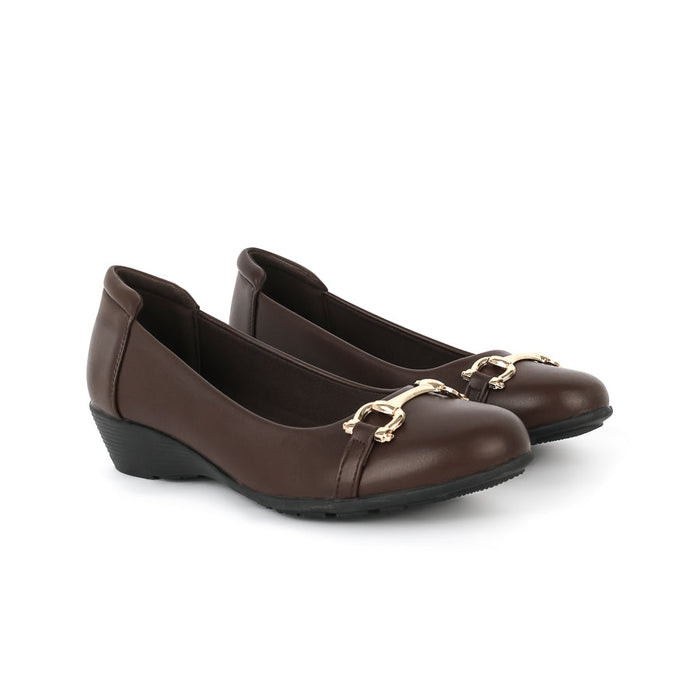
If this test fails: a wedge gives continuous support from heel to toe rather than leaving the middle hollow. Reana SE Slingback Wedge is the clearest example, and Evelyn Horsebit Flats is the flat option with a 1.5 inch lift.

Test 4: The Standing-Still Test
Walking helps circulate blood, but standing still is harder on your feet. It puts a continuous, static load on specific pressure points.
The test: do not just walk around the store. Stand perfectly still for two minutes on a hard surface.
What to observe:
-
Do you feel a burning sensation in the ball of your foot?
-
Do your heels start to throb?
-
Do you find yourself shifting your weight from one leg to the other?
If your body tries to escape the pain within two minutes, imagine eight hours.
If this test fails: the base is too narrow or the pitch too steep. A block heel or a wedge spreads the load: Raysa Pointed Mule Heel on a 2.5 inch block, or Layka Slingback Peep Toe Wedge with a 1 inch front platform.

Test 5: The End-of-Day Swelling Test
A woman’s feet swell as the day progresses, through gravity and fluid retention. A shoe that fits at 9 a.m. may be suffocating by 5 p.m.
The strategy:
-
Shop for shoes in the afternoon or evening, when your feet are at their largest.
-
Look for materials with a slight give.
-
Avoid rigid materials that cut into the skin when your feet expand.
If the shoe feels snug but comfortable when your feet are swollen, it is a safe choice for a long day.
If this test fails: choose a material that moves with you. Twyla Knit Block Heel uses flyknit that stretches and returns, and Mya Slingback Wedge has an adjustable side buckle so you can loosen it through the day.
The Checklist in Short
| Test | What you are checking | Fails if |
|---|---|---|
| 1. Toe movement | Width at the front | Toes overlap or the sides press |
| 2. Cushion rebound | Shock absorption | Insole sinks and stays down |
| 3. Arch feel | Structure under the midfoot | Feels hollow when standing |
| 4. Standing still | Pressure distribution | You shift weight within 2 minutes |
| 5. End-of-day swelling | Give in the material | Rigid, no stretch at all |
Why This Checklist Matters
Applying this checklist turns you from a passive shopper into a careful buyer.
-
Financial savings: you stop buying sitting shoes that you never wear because they hurt.
-
A healthier body: you reduce the risk of long-term problems such as bunions, heel pain and back pain.
-
Better focus: when your feet are not in pain, you can focus on your work.
Frequently Asked Questions
Can I apply these tests when buying online?
Three of the five, yes. Check the stated cutting for width, the insole material for cushioning, and the heel height and platform for pitch. Tests 4 and 5 need the shoe on your foot, so do them as soon as it arrives, indoors, before wearing it out.
What heel height works for an 8 hour day?
1.5 to 2.5 inches, on a block or a wedge. A front platform helps, because a 3 inch wedge with a 1 inch platform only gives your foot a 2 inch pitch.
How many work pairs should I own?
Two, and alternate them daily. Each pair gets a full day to dry out from sweat, which also makes both last considerably longer.
Should I size up to allow for swelling?
No. A shoe that is too long lets the heel lift with every step, which causes blisters. Keep the correct length and choose a wider cutting or a material with give instead.
What if a shoe passes all five tests but still hurts after a week?
Check your own foot shape rather than the shoe. A high arch, a low arch and a wide forefoot each need something different, and our guide to foot shapes has a one-minute test for it.
Conclusion
We need to reframe our definition of a good work shoe. It is not enough for it to look pretty on the shelf. It must support your movement and your long-term health.
Comfort is not a compromise on style. You can have both professional elegance and real support if you know what to look for.
If you are looking for a place to start, the Work Series is the part of our range built for exactly these hours.
0 comments