


The Secret to Comfort: Know Your Foot Shape First !

Many people don’t realise that everyone has a different foot type. Not all feet are the same, and these differences affect how comfortable we feel in a given pair of shoes.
Have you ever had a pair that feels perfect on you but not on someone else? That is because each foot type needs different support, and choosing the right shoe for yours is the key to real comfort.
In this blog we will go through the main foot types and how each one changes what you should look for.

How to Find Out Which One You Have
You can do this at home in about a minute. Wet the sole of your foot, step onto a sheet of paper or a dry tiled floor, and look at the print.
-
A full footprint with almost no gap in the middle means a low arch.
-
About half the midfoot missing means a normal arch.
-
Only the toes and heel showing, with the middle barely touching, means a high arch.
Do both feet. It is common for them to differ slightly.
1. Normal Feet (Neutral Arch)
Normal feet have a medium arch, not too high and not too low.
This type gives natural balance and support when walking, which makes it more stable. People with normal feet usually find it easier to choose shoes, as their feet fit most styles on the market.
Even so, a flexible sole with light arch support still helps keep you comfortable all day.
What to look for
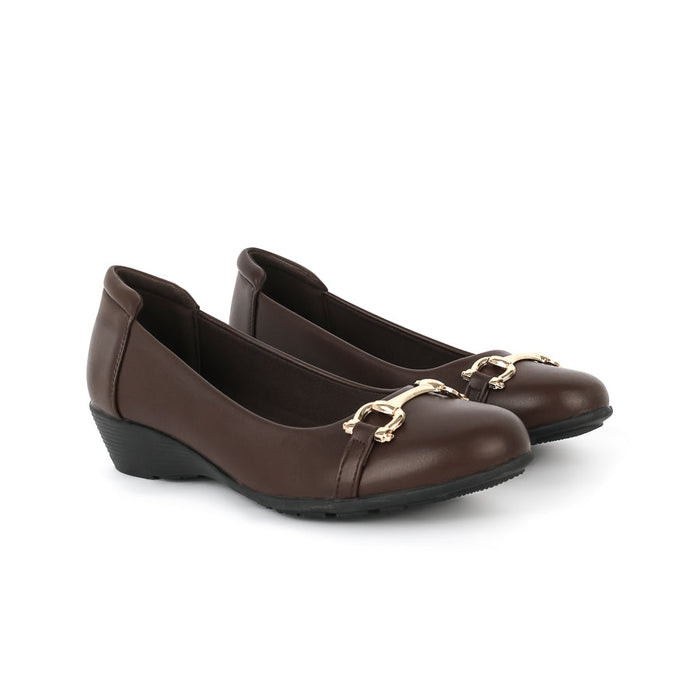
Almost anything works, so choose on heel height and cutting rather than support. Sofia Pointed Kitten Heel for work and Ayra Diamond Ballerina Flats for everyday wear both suit a neutral arch.
2. Flat Feet (Low Arch)
Flat feet, or fallen arches, occur when the arch does not form fully, so almost the whole sole rests on the ground.
People with flat feet may feel unbalanced when walking because the midfoot is not supported. This can cause pain or fatigue, especially when the feet are under pressure for long periods.
That is why it matters to choose shoes with firmer support through the middle and a sole that does not collapse. A supportive insole and added stability help prevent discomfort and longer-term problems.
What to look for
Counter-intuitively, a completely flat shoe is often the worst choice here. A small, stable lift supports the middle of the foot instead of leaving it unsupported.
A wedge does this well, because the sole is continuous from heel to toe: Dhea Slingback Peep Toe Wedge and Reana SE Slingback Wedge are both built that way. Avoid thin, unpadded ballet flats for long days.
3. High Arch (Pes Cavus)
A high arch, also known as pes cavus, occurs when the arch is higher than normal, so the middle of the foot does not touch the ground while standing.
People with high arches often feel more pressure on the front and back of the foot, since the midfoot carries less of the load.
This can strain muscles and ligaments, and raises the risk of heel pain or ankle discomfort. A cushioned sole helps spread the pressure more evenly, and soft shock absorption matters more here than firmness.
What to look for
Cushioning first. Vienna X Pointed Kitten Heel has a fully padded footbed on an upgraded sole, and Sofia Luxe Pointed Kitten Heel uses a plush latex-cushioned insole. Avoid a hard, thin sole, which concentrates pressure on the heel and the ball of the foot.
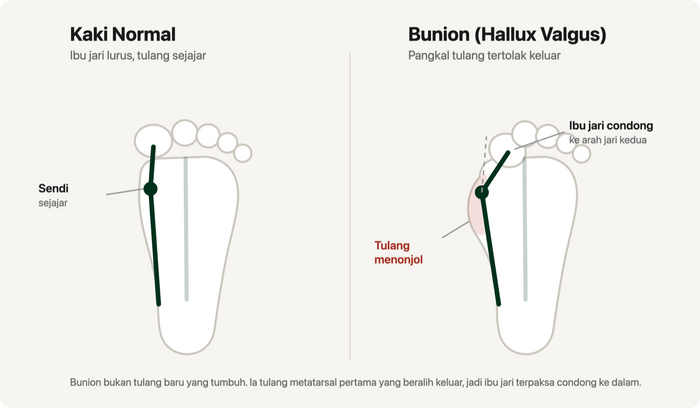
4. Wide Feet and Bunions
Arch height is only one dimension. Width is the other, and it is the one most often ignored.
If you get the correct length and the front still presses on the sides of your foot, the problem is width, not size. Sizing up will only make the shoe too long while leaving the front just as narrow.
What to look for
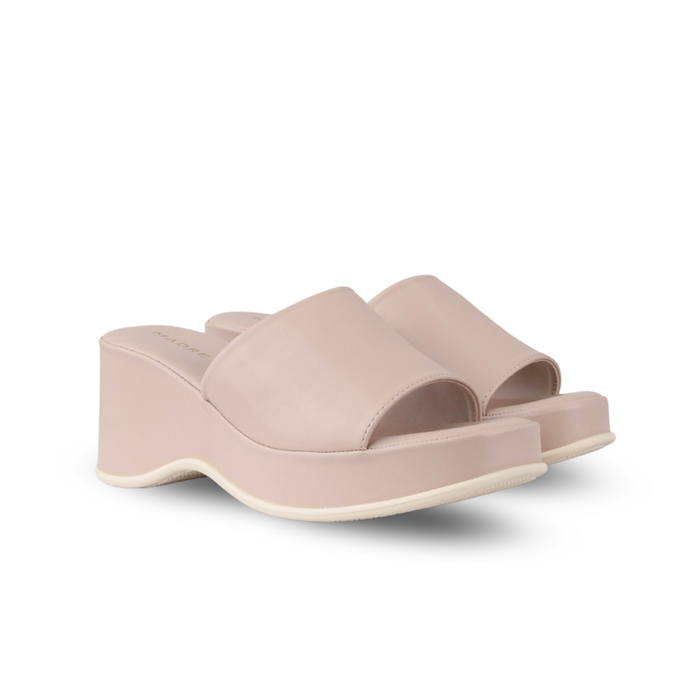
A wider cutting, not a bigger size. Evana Square Toe Pump Heel has a square toe and a roomier front, Karla Pump Block Heel has a wide toe box on a stable block heel, and Twyla Knit Block Heel uses flyknit that stretches with the foot.
The full list of signs, and the five shoe types to avoid, is in our guide for wide forefoot.
Frequently Asked Questions
Can my foot type change?
Yes. Arches can lower with age, after pregnancy, and after long periods of weight gain. It is worth repeating the wet test every couple of years rather than assuming.
Do I need orthotic insoles?
For most people, a shoe with the right built-in support is enough. An insole adds cushioning but takes up room inside the shoe, and it cannot correct a sole that is unstable to begin with. For persistent pain, see a podiatrist rather than guessing.
Are flat shoes bad for flat feet?
Thin, unpadded ones often are, because the midfoot gets no support at all. A small lift with a padded footbed is usually more comfortable. We cover this in why flat shoes can make your feet hurt more.
What if my two feet are different?
Buy for the larger foot and fill the gap on the other side with a pad. A shoe that is too small cannot be made bigger.
How do I know the shoe actually fits once it arrives?
Stand up and walk on a hard floor. You should have about a finger’s width of space in front of your longest toe, your heel should not lift, and nothing should press on the sides.
Final Thoughts
Choosing shoes that match your foot type is not only about comfort, it is about long-term foot health. Each person needs a different kind of support depending on the shape of their feet.
Do the wet test, note which type you are, and use it as your filter from now on. Every Madre product page lists the heel height, the cutting and what the insole is made of, so you can check against your own type before ordering.
For more on foot care and shoe selection, follow our blog, or start with the best sellers.
0 comments